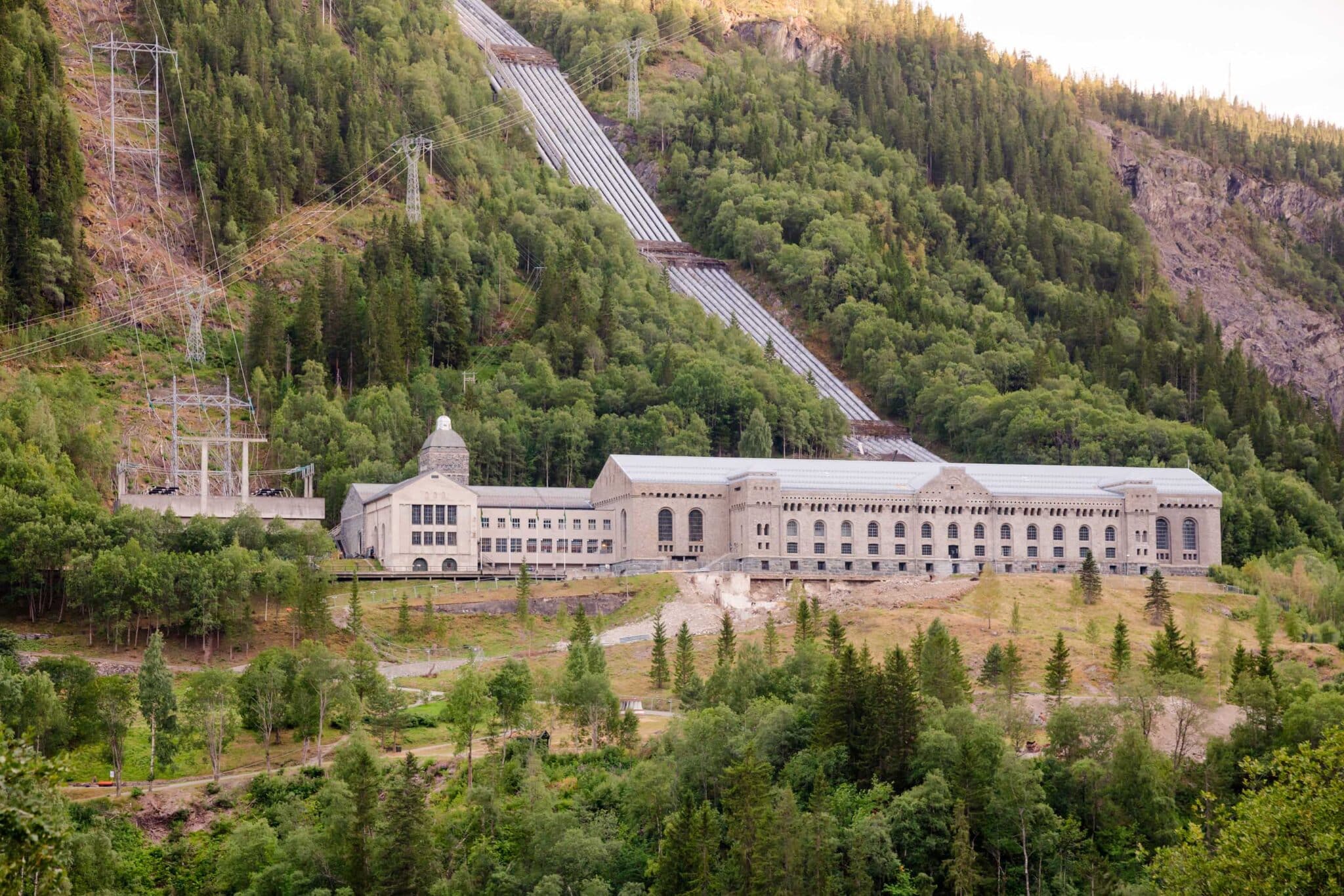
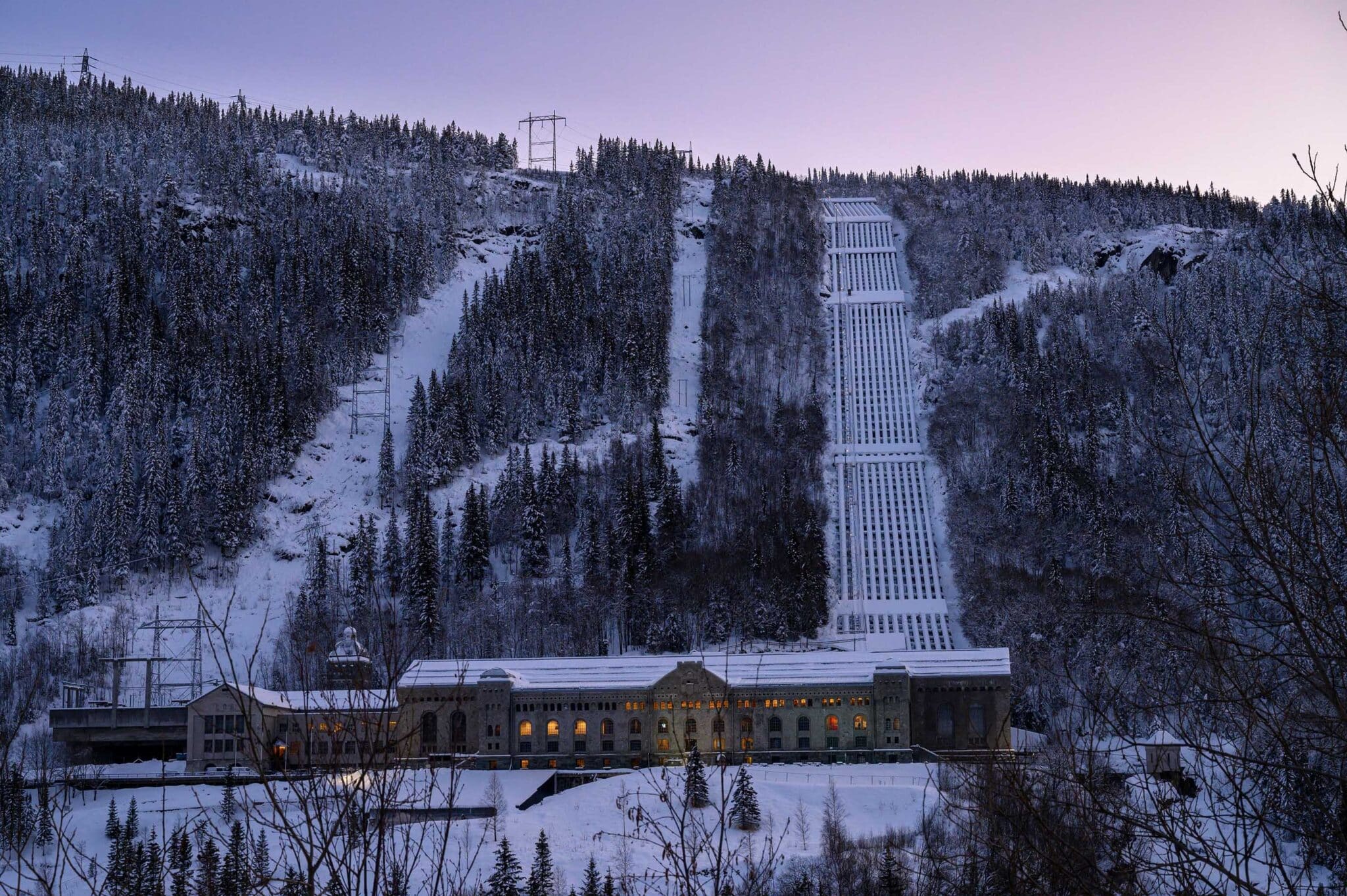
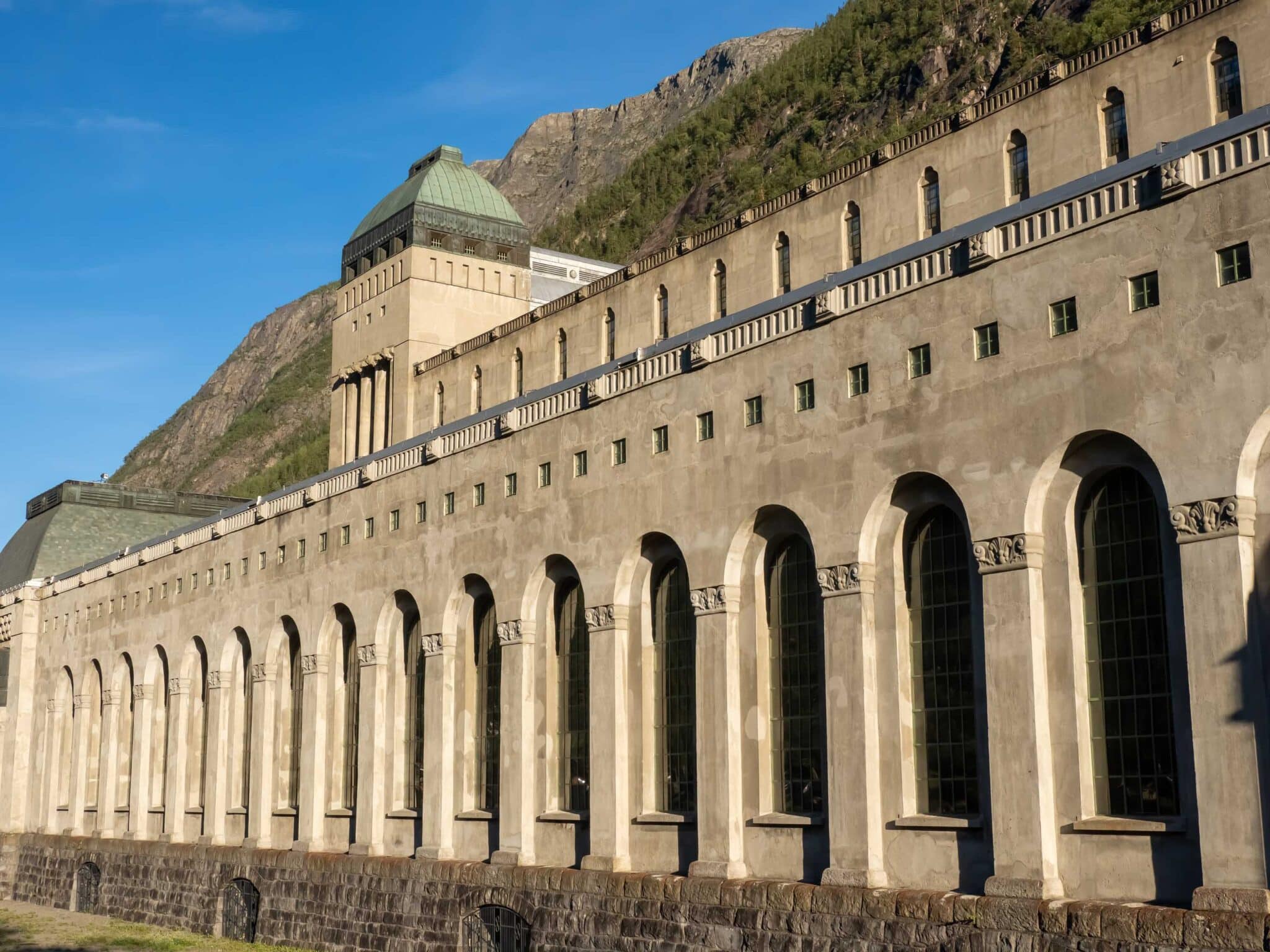
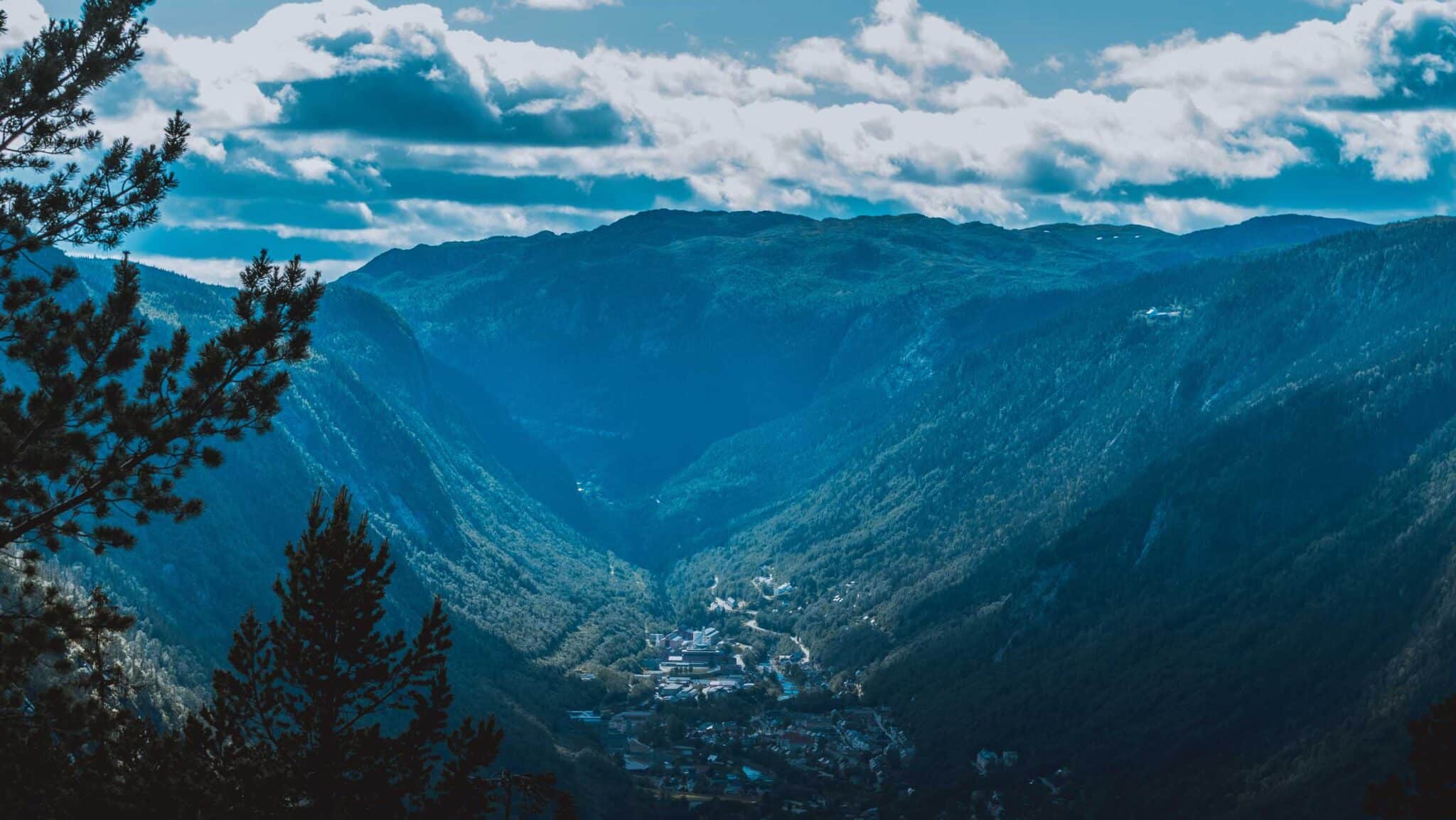
With a short distance to Rjukan, Sandviken Camping is located right by Lake Tinnsjøen. Contact us today if you want a historical experience at Vemork.
During the Second World War, Norsk Hydro's heavy water production at Vemork was an important part of the Nazi nuclear project. Four military operations were launched against the production. Just about a month after the German attack on Norway, an order was issued that heavy waterproduction was to be increased fivefold. The British were alerted to the increased German interest in heavy water. The feared that the Nazis would use the heavy water to develop an atomic bomb.
The alarm went off in the spring of 1942 when scientific experiments showed that it was possible to produce plutonium in reactors with heavy water. The British decided to stop heavy water production, which took place in the basement of the hydrogen factory at Vemork. At the end of March 1942, Sgt. Einar Skinnarland (24 years old) was sent to Norway. His task was to liaise with Norwegian agents in the Rjukan area and be the link to London..
Operation Freshman and Grouse
In the autumn of 1942, the first operation was launched. British engineer soldiers from Combined Operations were to carry out the sabotage operation using gliders towed by bombers. This was the first time the British had used gliders over such a long distance. Two troops of 17 soldiers each were sent.
A vanguard... Grouse - was sent in advance to prepare the landing site. The group landed on Hardangervidda on 18 October 1942 and consisted of Ensign Jens Anton Poulsson (24 years), sergeant Arne Kjelstrup (29 years old), Ensign Knut Haugland (25 years) and sergeant Claus Helberg (23 years).
The tragedies
On 19 November, Freshman was launched, but the planes did not pick up the signals from the ground. On the return journey there were problems with icing. Only one bomber returned to Scotland. The other bomber and both gliders crashed in Western Norway. This tragedy claimed 41 victims; those who survived the crash were brutally murdered or shot by the Nazis in Stavanger, Egersund and Trandum.
Operation Gunnerside
After the disaster, the group was Gunnerside from Company Linge was sent to assist Grouse. The group was led by Ensign Joachim Rønneberg (23 years), and otherwise consisted of sergeant Birger Strømsheim (31 years), Ensign Knut Haukelid (31 years), sergeant Hans Storhaug (27 years), sergeant Fredrik Kayser (24 years) and Ensign Kasper Idland (24 years).
The success
On 27 February 1943, the saboteurs managed to breach the gorge and blow up the heavy water plant without being detected. 500 kg of heavy water flowed into the sluice. No lives were lost during the action. Rønneberg, Strømsheim, Idland, Storhaug and Kayser skied to Sweden, while the others stayed behind to build up resistance groups.
Bombing of Vemork and Rjukan
When production resumed, the Americans bombed Vemork and Rjukan on 16 November 1943. Over 700 bombs were dropped. Only 18 bombs hit the plants, but the action claimed 22 civilian lives, including women and children. This led to strong reactions from the Norwegian authorities.
The sinking of D/F Hydro
The Nazis eventually decided to move the equipment to Germany via the ferry D/F Hydro. The operation to sink the ferry was led by Ensign Knut Haukelid (32 years), together with Rolf Sørlie (27 years) and Knut Lier-Hansen (27 years).
On Sunday 20 February 1944, the charges went off on Tinnsjøen. 18 people died, 14 Norwegian civilians and 4 German soldiers. This marked the end of the battle for heavy water, and the Nazis were finally cut off from the supplies they needed to complete their nuclear project.